
Summer Seminar

Summer Seminar is an annual intellectual adventure through speculative fiction and critical (re)thinking. This year’s theme is “Out of Time,” exploring time, hope, routine, and solitude.

Our Reading List
Summer Seminar is designed to spark your curiosity and encourage unconventional inquiry.
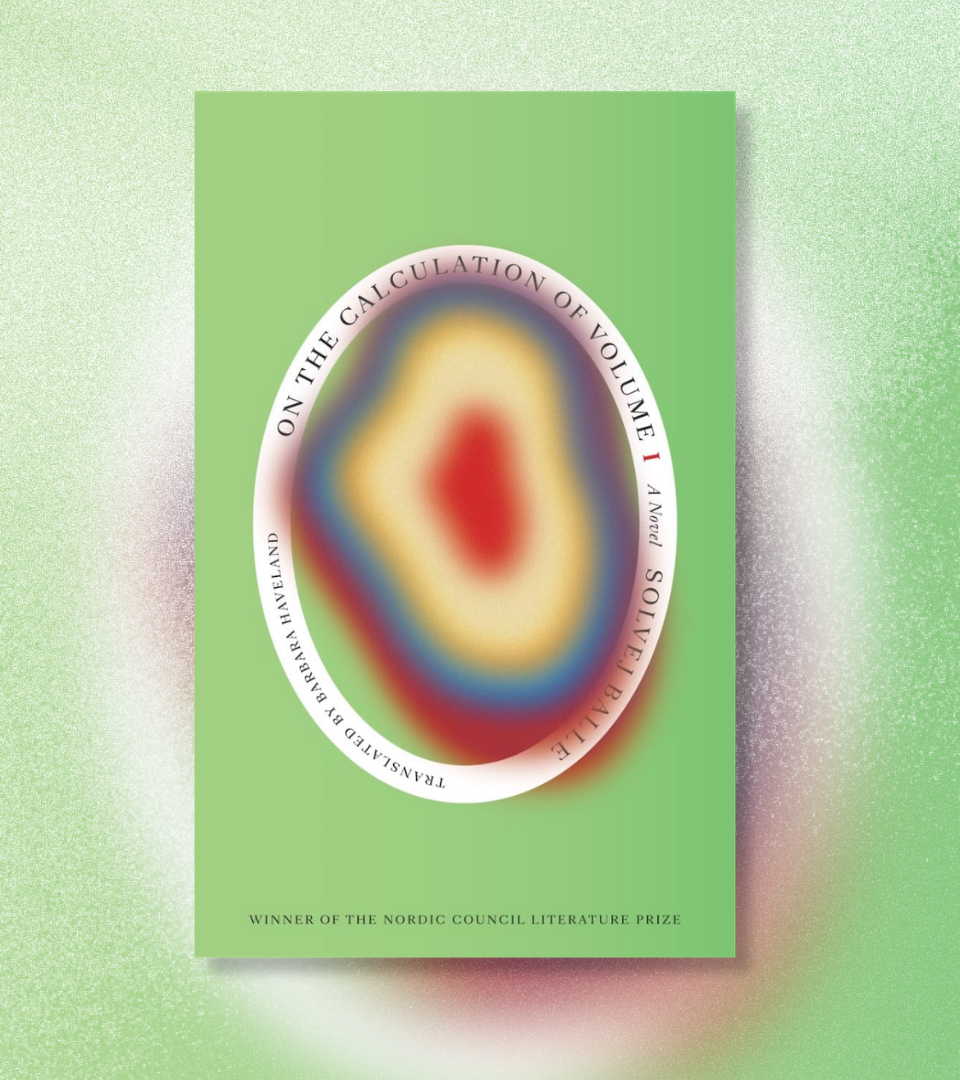
This summer, we’re reading On the Calculation of Volume (Book I) by Solvej Balle (2020 tr. 2024) and The Wall by Marlen Haushofer (1963 tr. 1990).
Both books feature women cut off from their normal lives—one by time and the other by place. Both feature first-person narratives full of sparse prose and prompt us to question: what if it was me?
Grab them from the library, pick them up at an indie bookstore, or find them in any other way you choose!
We’re building a social commonplace book.
This summer, we’ll work together in a private reading group to build a shared resource.
Every Monday, Wednesday, and Friday, you’ll receive a prompt. Prompts will highlight selections from the text, as well as offer related ideas to enhance our thinking.
Use these prompts to reflect on what you’re reading, share your personal experiences, and contribute the creative connections you’re making as the summer progresses.
You’ll receive a PDF version of our collective commonplace book by September 15.
The Details
Between July 7 and August 25, you’ll read two novels: On the Calculation of Volume (I) and The Wall. Find a suggested reading plan below.
On the Calculation of Volume
Week 1 (July 7): up to #123 (pp 1-49)
Week 2 (July 14): up to #228 (pp 49-107)
Week 3 (July 21): up to #366 (pp 107-161)
Week 4 (July 28): catch up & discussion
The Wall
Week 5 (August 4): pp 1-80
Week 6 (August 11): pp 80-157
Week 7 (August 18): pp 157-228
Week 8 (August 25): final reflections & discussion
Both of these novels are rich in ideas and emotion while being sparse in their prose—which is a fancy way of saying these stories are deep but they’re quick reads. Depending on how fast you read, plan on about 1 hour per week in July and about 1.5 hours per week in August.
Of course, you’re welcome to read at your own pace, whether faster or slower! Some discussions will be book-specific, but many will use ideas from the books as jumping-off points without relying on prior knowledge of the plot or characters.

About Tara

I’m a writer, podcaster, and critic who studies emerging forms of work in the 21st-century economy. I’m especially interested in the spirit of entrepreneurialism as it pertains to the stories we tell about work, success, and personal growth. I’ve been at this in various forms for over 16 years now—blogging, teaching, coaching, and leading communities.
Today, I marry conceptual curiosity with practical application—helping people reevaluate their assumptions about how they work, what they’re working for, and how their work creates value in the wider world. I draw on feminist analysis, critical theory, sociology, media studies, and philosophy, as well as my extensive experience working with small business owners.
Like many people I study, work with, and create for, I ended up here by accident.
My answer to “What do you want to be when you grow up?” was never podcaster, blogger, or online educator. I’m an elder millennial—this ‘career path’ didn’t exist yet.
Yet, by all rights, I’m doing what I always wanted to do: studying how sociocultural forces shape our daily (work) lives. And I use digital media and tools to do it.
Since work permeates every part of our lives, my self-given mandate is quite broad and flexible. If it impacts how we work, the context in which we earn a livelihood, or how we prepare for the next day of work, I consider it within my purview.
Discussion Guidelines
Summer Seminar works best when participants not only "do the reading" but also join in the conversation. Contributing your reflections and sharing with others is a key component of how we engage with new ideas and different points of view—which is the true purpose of Summer Seminar.
Seminar discussions tend to be full of care, context-aware, and grounded in curiosity (our values). And we know that moderation is critical to creating a space where those conversations can happen.
All participants agree to follow the discussion guidelines posted here (and on our Seminar site) and understand that contributions that defy these guidelines will be moderated as appropriate.
No hate speech, bullying, or harassment will be tolerated—of course.
Be care-full. Stories tap into emotions and experiences that can be jarring or even painful. Take care of yourself while reading, thinking, and reflecting. And remember that others are making their own connections and feeling their own feelings!
Get curious. Nothing in Summer Seminar needs to be taken for granted or accepted without critique. If an idea doesn't feel quite right, explore that impulse with respect for yourself, your experiences, and others. Remember, disagreement is a healthy part of learning.
Explore the context. "Every question can be a doorway if it's come to in good faith," says author Jonathan Auxier. Practice forming questions, stepping through doorways, and exploring answers.
Expand your empathetic bandwidth. I define empathetic bandwidth as our ability to imagine ways of being, thinking, and feeling that are different from our own. Summer Seminar brings together a diverse group of people with a wide range of identities. Be mindful of your assumptions and expectations about what's "normal."
Stay loose. Participating in online discussions can be intimidating! So here are a few things you don't need to worry about: perfect grammar, wholly original ideas, having read all the same books as everyone else, not having an advanced degree (I don't!), responding the "right" way to a prompt, or asking a stupid question. Stay loose and jump in.
Respect everyone's privacy. Everything that participants share during Summer Seminar should remain private to this group.
Join Summer Seminar
There are 3 options for joining Summer Seminar. Join the one that best matches your situation. All three get you exactly the same experience: the private reading group, reflection prompts, and discussions.
During checkout, you’ll be asked what email address you’d prefer to receive Summer Seminar communications at. After checkout, that email address will be added to our host site (on Ghost), and you’ll receive a welcome email with additional information.
Belong | $40
This option is designed to make Seminar as accessible as possible.
Support | $75
This option helps make Seminar possible by fully covering the cost of participation.
Sustain | $125
This option helps make Seminar and What Works sustainable by providing above and beyond the cost of participation.
Summer Seminar is an 8-week private reading and discussion group.
Summer Seminar is an 8-week private reading and discussion group.
Summer Seminar is an 8-week private reading and discussion group.
FAQs
What will I learn in this program?
1
What you learn is up to you! This isn’t a typical online course that’s organized around a particular skill or outcome. It’s a container for self-discovery and meaningful conversations.
Past participants have told me they appreciate the chance to work with a diverse group of peers, read books they might not have otherwise read, and be introduced to ideas they hadn’t encountered elsewhere.
What happens after I join?
2
During the checkout process, you’ll indicate what email address you’d like to use for Seminar. That email address will then be added to our Seminar website (hosted on Ghost), and you’ll receive a welcome email with more information on our books, discussion guidelines, etc. Later, you’ll receive a prompt for introducing yourself. We’ll officially get started on July 7—but you’re welcome to start reading whenever you get your hands on our first book!
Who can I expect to meet?
3
I’m proud to say that What Works has a diverse audience of people from different backgrounds. You can expect that Summer Seminar will have participants who are business owners, freelancers, traditionally-employed people, avid readers, not-so-avid readers, nerds, academics, and high school graduates. In past years, there’s been a strong representation of participants from all over the world.
Are there live calls?
4
There are no live calls planned for this year.
What is your refund policy?
5
Refunds may be requested until July 7, 2026. There are no refunds after we begin Summer Seminar. Email hello@whatworks.fyi.
Speculative Fiction?
Speculative fiction is a genre of storytelling that often includes science fiction and stories set in the future, but also includes stories that introduce “unrealistic” elements or alternate histories to create extraordinary circumstances. They’re stories that begin with a “what if?” and then speculate on how people might respond in those scenarios.
There are no spaceships, aliens, or interstellar travel in either of these novels. You’re welcome. And I’m sorry.