
Rethink Your Small Business Status Quo
To get the results you want, it pays to start with a blank slate.
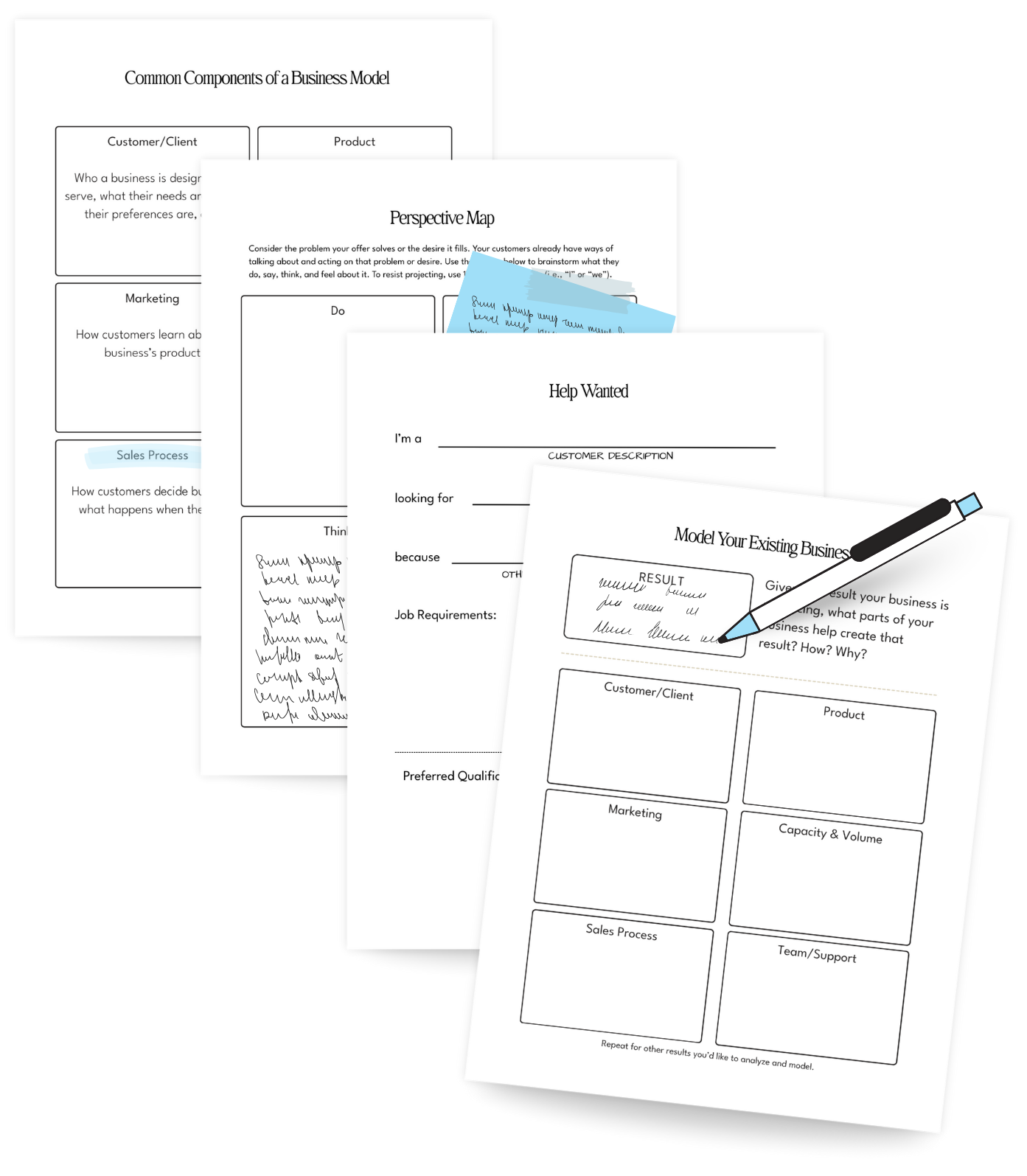
Printer-Friendly PDF
Most businesses reach a point where they become a mess.
And no matter how valuable the stuff in the mess is, it’s still a mess.
You add new ideas without taking away the old ones. You start to assume that the way things are is the way things have to be. You work with what you’ve got rather than imagining what you could create.
If you’re looking for a way to declutter, start fresh, and build a business for long-term sustainability, you need a blank slate.
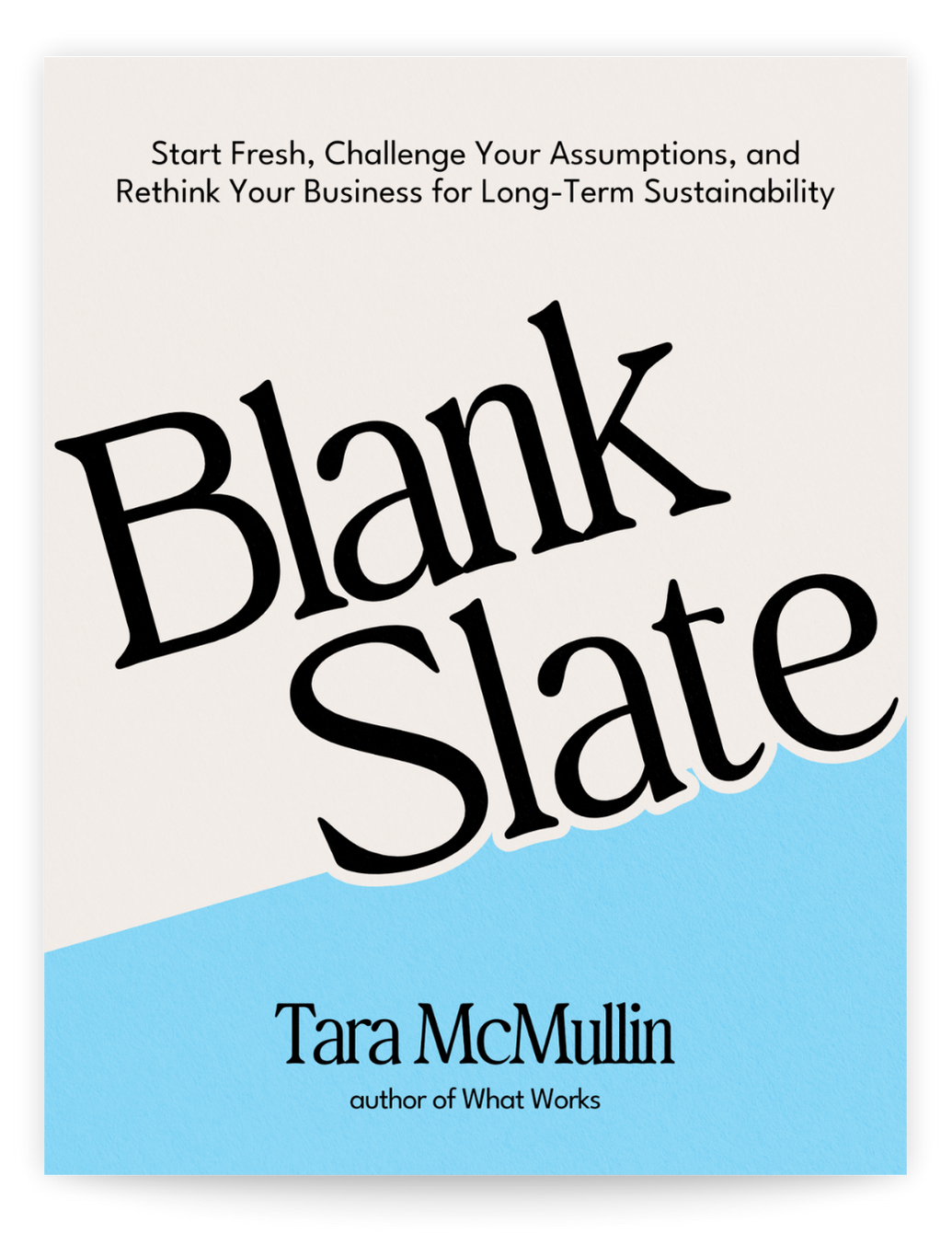
Blank Slate is a guide and workbook for becoming your own business strategist. Step-by-step, you’ll design a business that prioritizes your needs, facilitates the work you love, and creates remarkable experiences for your customers or clients.
Tara McMullin distills over 17 years of experience working with small business owners like you into a tidy package you can use again and again to hone your strategy and build a more sustainable business.
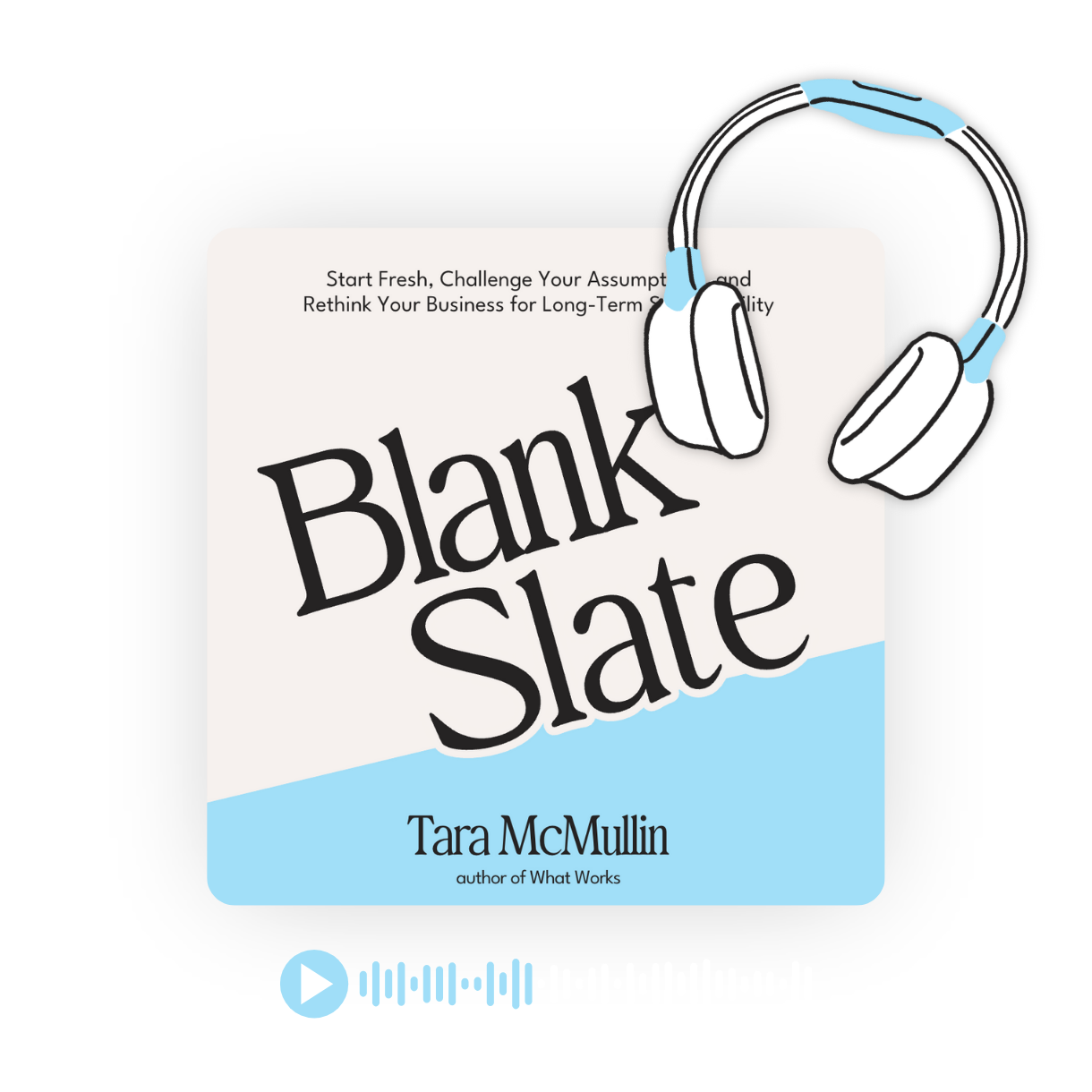
Audio Version for On-The-Go
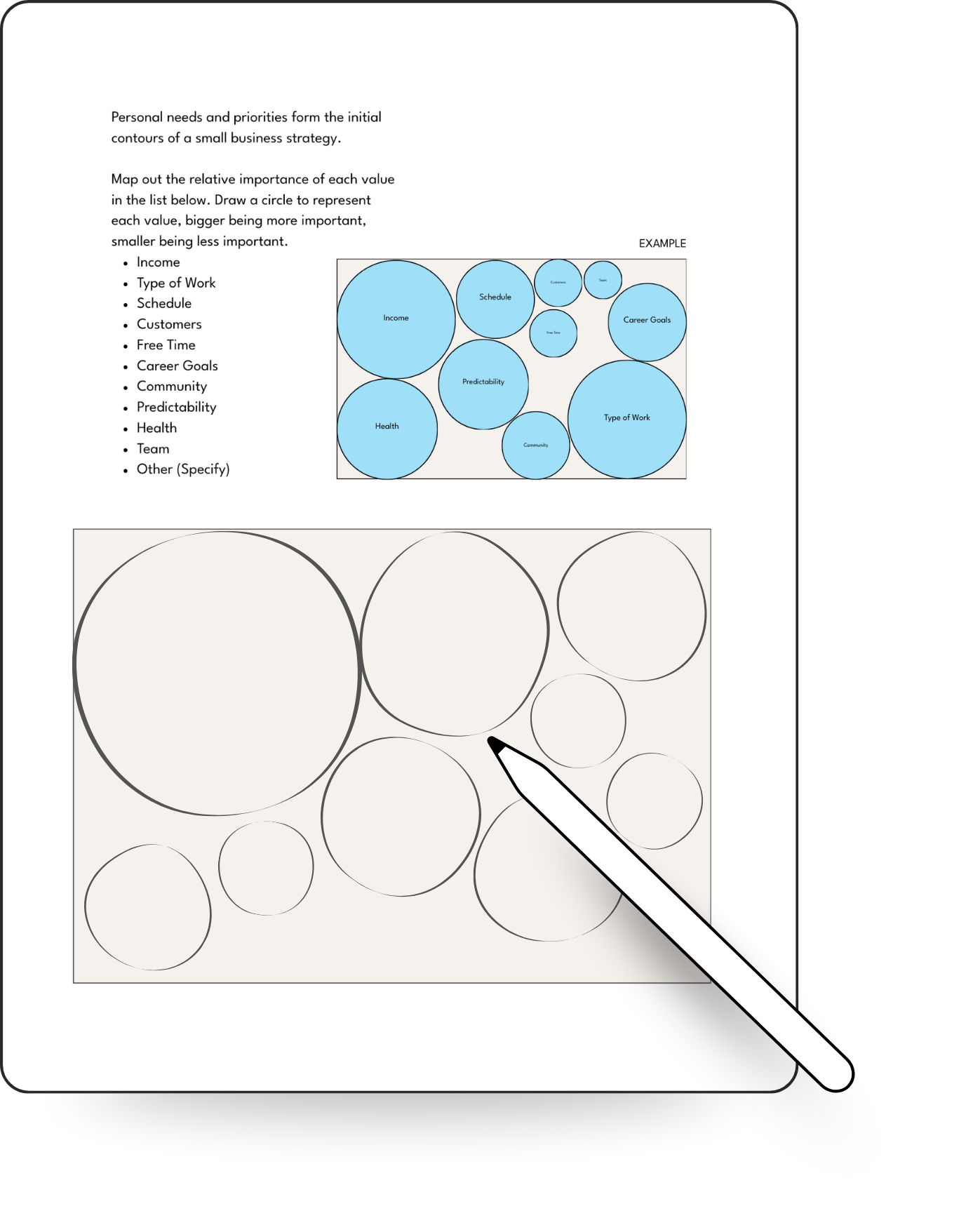
Full-Color PDF for Tablets
Table of Contents
Introduction
“I wholeheartedly believe that any business worth building is worth building for long-term sustainability. I believe that the choices we make today should support a future we want to inhabit. I believe that our customers deserve something more than a house of cards.”
Chapter 2: Theory of Business
“A company’s theory of business communicates ‘what it is, what it represents, and what its basic concepts, values, policies, and beliefs are.’
A strong theory of business allows you to face novel challenges, weather market changes, and grow without losing focus. It brings clarity to any decision about what to do next as your business evolves. And it helps connect the narrative of your brand with the operational realities of the work you do.”
Chapter 4: Your Offer
“The fastest path to business success is to make a product people want to buy. Not a product that people can be easily convinced to buy. But a product people can immediately recognize as the thing they've been looking for (even if they didn't know they'd been looking for it). There are many ways to do this: solve a readily apparent problem, tap into a deeply felt desire, or jump on an emerging trend, to name a few.
In other words, recognition is a critical and often overlooked factor in a business's success and sustainability.”
Chapter 6: Marketing
“Any marketing strategy—no matter what your business is, no matter what tactics you use, no matter what your strengths are—needs to fulfill three core objectives: discovery, nurturing, and evaluation. An effective marketing ecosystem blends ideas and practices that fulfill these three objectives to connect the right people to the right product at the right time.”
Chapter 1: Needs & Priorities
“Strategy is an architecture for decision-making. A strategic process, like the one in this guide, builds a foundation of decisions that you can then build atop. And as Maren Morris says, The house won’t fall if the bones are good.
The first step in building this foundation is taking stock of your needs and priorities. Because if they’re not at the center of how you conceive of your business, your later decisions won’t reflect what’s most important to you.”
Chapter 3: Model & Structure
“A blank-slate business model is more like a hypothesis than it is a blueprint. It’s a strong guess about how things could work rather than a prescription for how they should. When you start from a prescription, blueprint, or formula, you adapt your needs, desires, and values to fit the prescription rather than asking how you might model a business that aligns with your true needs, desires, and values.”
Chapter 5: Operations
“Operations often gets a bad rap as a sort of stodgy, uninspired cousin of the more creative or exciting aspects of business strategy. Plenty of entrepreneurs start to lose interest as soon as you start talking about process and procedure. But operational design has the same creative potential as any other aspect of business strategy. The answer to ‘How do we make this happen?’ could be almost anything, and exploring options rather than trying to do things ‘right’ can lead to novel, clever, or even playful breakthroughs.”
Chapter 7: Getting to Work
Lorem ipsum
What You’ll Learn

Effective Communication
Learn how to communicate with clarity, confidence, and purpose. This course explores active listening, tone, body language, and message delivery for stronger, more impactful connections.

Content Planning
Learn tools for organizing ideas, setting goals, and building consistent schedules. From brainstorming to publishing, this course helps turn scattered thoughts into a cohesive plan.

Process Improvement
Discover how to analyze workflows, identify inefficiencies, and implement smarter systems. This course helps you create processes that actually work, for a team or just for yourself.

Effective Communication
Learn how to communicate with clarity, confidence, and purpose. This course explores active listening, tone, body language, and message delivery for stronger, more impactful connections.
Meet Your Instructor

Monet Goode
Founder & CEOMonet is a lifelong educator with a passion for creating accessible, engaging learning experiences. Known for a calm, encouraging teaching style, Monet believes that growth happens when learners feel both challenged and supported.
-
![]()
"The mix of video, written content, and downloadable resources makes everything feel accessible and well-rounded."
Former Customer
-
![]()
"What I love most is the flexibility. I can go at my own pace, revisit lessons, and keep learning whenever it works for me."
Former Customer
-
![]()
"Even as a total beginner, I never felt lost. The step-by-step structure and encouragement along the way made all the difference."
Former Customer
-
![]()
"This platform has become a regular part of my routine. It’s easy to use, beautifully designed, and full of helpful material."
Former Customer




Gain access to all our programming when you sign up.

Frequently Asked Questions
-
Membership typically includes access to our full library of digital content—videos, courses, resources, and any new material we release while you're subscribed.
-
Definitely. You can switch plans, upgrade, or make changes to your membership anytime.
-
Yes! We’re always expanding the library with fresh content, tools, and updates to keep your learning and inspiration going strong.
-
Memberships are flexible and can be canceled at any time from your account. You’ll retain access through the end of your current billing cycle.