Just Because You Can: The Eggbeater Effect Revisited
Sean asked me how my day was going. “Oh, just making more work for myself,” I replied with the tone that implies I realize that half of my problems (at least) are of my own creation.
“Oh yeah, how are you doing that?” he responded.
“Making things fancy.”
I love making things fancy. I love learning how to make things fancy. I love collecting tools and software that helps me make things fancy.
The thing about making things fancy, though, is that those tasks tend to take longer than before I learned the new skill or implemented the new tool. No surprise there. Although I can often reduce that extra time by developing fluency with the new technique, I can rarely claw it all back. Plus, as soon as I’m fluent in one fancy thing, I’m on to learning the next fancy thing.
I am not at all alone in this, of course. This is a very common pattern in how new skills and technologies impact the work we do and how we do it.
Call it the eggbeater effect.
That’s what Sarah Marshall, host of You’re Wrong About, called the phenomenon when applied to housework on an episode about The Stepford Wives:
“Women have been told over and over again that technology will free them. Technology will save you time. ...women aren't being freed by technology. Women are a technology. Like, the housewife is the best technology."
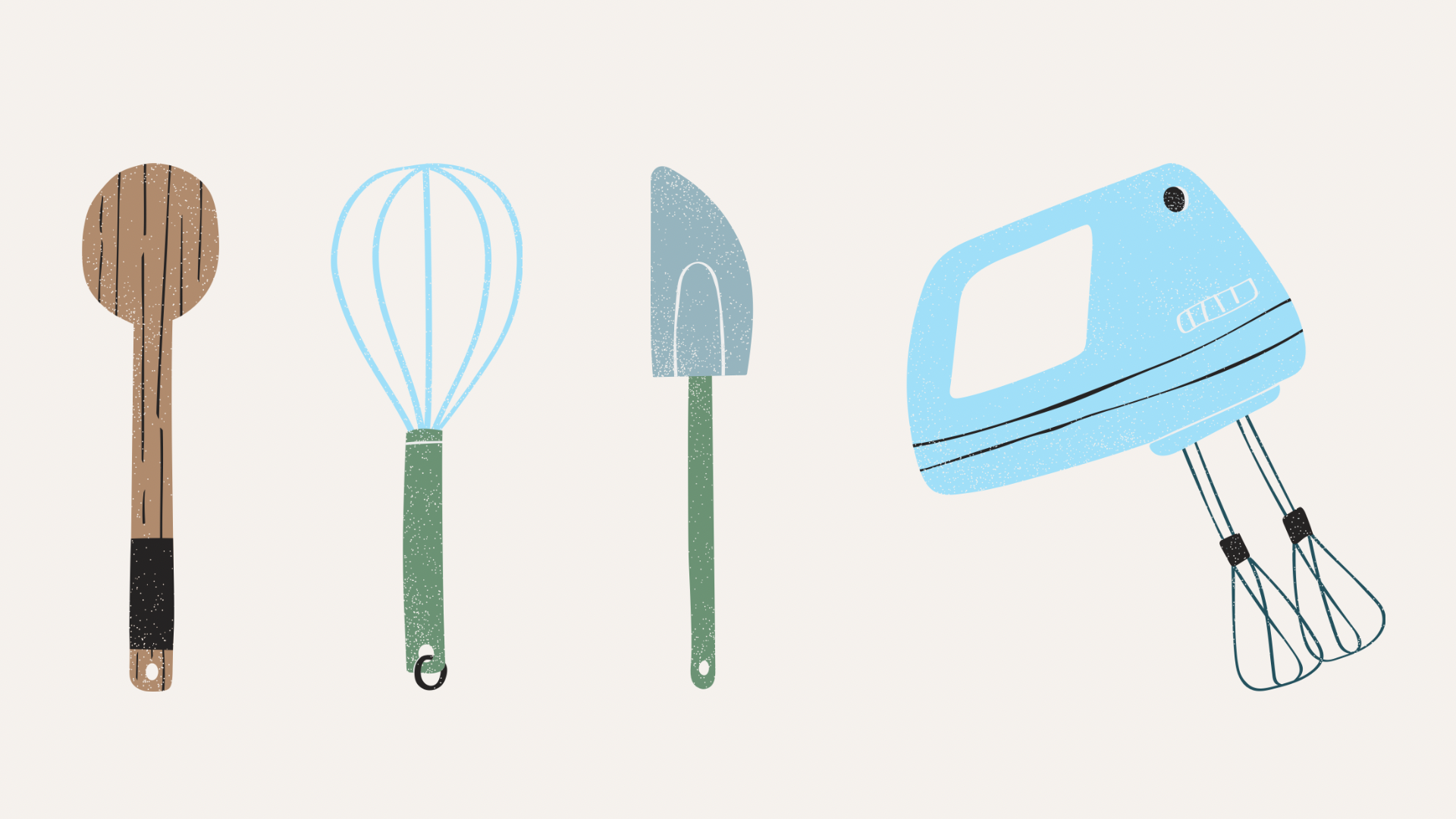
Before there were eggbeaters, there were women in kitchens beating eggs with whisks and wooden spoons. After eggbeaters were invented, women were still in kitchens beating eggs, but they were preparing dishes made newly possible through this technology—such as the modern soufflé. In other words, eggbeaters created an opportunity to make things fancy.
Today, I want to talk about how technologies that promise labor and time savings often result in more labor and more time spent, while simultaneously dulling our curiosity about whether the work we're doing is worth doing at all.
Back at the start of 2022, I wrote a piece aptly titled “The Eggbeater Effect” as part of a series exploring the conventional wisdom that “time is money.” This was 8 months before the public launch of ChatGPT. Over the last 3 years and change, AI companies have insisted that their tools are so powerful that work as we know it will forever be changed, even eliminated entirely.
The evidence for this is quite mixed. Even more mixed than I assumed it was when I started to research AI productivity gains to update “The Eggbeater Effect.”
MIT's "State of AI in Business 2025" report found that, "Despite $30–40 billion in enterprise investment into GenAI, ... 95% of organizations are getting zero return." While some sectors, such as Tech and Media, are beginning to see structural change, most sectors are widely experimenting with or adopting AI tools, but those tools aren't producing the kind of transformation that AI boosters have promised. Meanwhile, a recent survey by Workday finds that "Nearly 40% of AI time savings are lost to rework, including correcting errors, rewriting content, and verifying outputs from one-size-fits-all AI tools. Only 14% of employees consistently get clear, positive net outcomes from AI."
In the words of the great John Oliver, cool.
I'll also add that the framing and conclusions of these two reports are quite strange. Instead of finding deficiencies in AI products, the deficiencies are located in the organization and, often, with workers. It's kind of the eggbeater effect at scale—the problem isn't the tool or the newly imposed expectation, it's the work process and the people doing it that need to recalibrate. Why? Unclear. But AI exists, so we should probably figure out how to use it.
I set out initially to do a light update of my original article and bring it into the AI era. But, as per usual, I basically rewrote the whole thing. The good news is that it's not all about AI, but really labor-saving tools generally. It's about what happens when we incorporate new tools (and their corresponding expectations) into our work and how to decide if that's the best move for our goals. I offer a critical framework for taking a close look at whether the work we spend our time on is actually leading to the results we want.
By the end of this piece, I hope you find yourself asking, “Wait, why am I doing this?” much more often.
Let’s start a bit further back—with the suburban middle-class home of the 1950s.
More Work for Mother
The vacuum cleaner got its start at the turn of the 20th century, but it wasn’t until after World War II that vacuums made their way into the closets of suburban ranch-style homes. Mid-century housewives could—one assumes—clean faster, more independently, and more frequently thanks to this marvel of engineering. In her book More Work for Mother, historian Ruth Schwartz Cowan uses the example of the vacuum cleaner to illustrate how technologies that seem like obvious wins for housewives are actually quite complicated in their impact on the work of keeping house.
Cowan demonstrates how simply comparing the vacuum to the broom or mop seems to leave us with an obvious winner. The machine must be faster and better, right? But Cowan situates the vacuum within the broader work process of cleaning floors. That process includes moving furniture and other obstacles out of the way and putting them back, disposing of the byproducts of vacuuming, moving the cleaning implement to where the cleaning is actually happening, etc.
Suddenly, the productivity gains seem less compelling. Many of the constituent parts of the work process are the same whether using a vacuum or a broom. The gains produced by the vacuum are present in only one small part of the total work process. What’s more, Cowan argues, the promise of the machine turns the task of cleaning the floors into something the housewife is supposed to do more frequently than ever before and with less help from other members of the family. In other words, there’s more work for mother.
Looking at the impact that vacuum cleaners have had on housework in this way, ”the question of whether cleaning a rug has been made easier or faster by the advent of vacuum cleaners becomes considerably more difficult to answer,” writes Cowan. “Easier for whom? Faster for whom? Under what conditions?”
It’s worth noting that Cowan’s book is nearly as old as I am. So she isn’t talking about a lightweight Dyson, let alone a robovac. Technology progresses, and gains become better defined, but in the process, we rewire our expectations and routines. Despite its mild anachronism, Cowan’s system-oriented analysis is just as relevant as ever. By looking at all of the tasks associated with the process of achieving a particular outcome, we can make a much better assessment of whether a new technology or technique is really saving us time or labor.
Here’s a very simple example of this analysis in one of my workflows. I make episodes of the What Works podcast in software called Descript, which allows me to record, edit, and export the files that then get disseminated to listeners. Descript can do some interesting machine-learning tasks as part of this process, including transcription. That transcription also makes it possible for Descript’s system to identify retakes—that is, the numerous times I stop to re-record because I’ve tripped over my words or decided I liked a different wording or tone better. Once it’s identified the retakes, it’s able to eliminate all but the “best” one.
Honestly, this feature works surprisingly well. And it can save me some time. But editing out retakes is part of a much larger editing process, including eliminating loud breaths or mouth sounds, adding in music at appropriate places, stretching out phrasing, or collapsing pauses. Even if the software could truly choose the best takes and eliminate the rest, the time and labor savings would be modest because of all the other tasks I do manually by listening closely to the recording. But of course, the software doesn’t do it perfectly, and I often spend time figuring out where it went wrong and making my own choices about what to cut.
So I think it saves me time… but I’m actually not sure now that I’ve written that all down.
Speaking of which… Cowan discusses how the 19th century was a revolutionary time for the invention of labor-saving devices for the home. Yes, eggbeaters and washing machines, apple parers, better stoves, and store-bought flour. But she makes this surprising sociological observation:
“...when discussed by the people who actually did housework, or by the people who watched the people who were actually doing it, it seems not to have become one whit more convenient-or less tiring-during the whole of the century. What a strange paradox that in the face of so many labor-saving devices, little labor appears to have been saved!"
Ruth Schwartz Cowan, More Work For Mother
Perhaps we’d be served to think of most “labor-saving devices“ as “capacity-creating devices”—not so much saving us time or energy but creating new possibilities for our time and energy.
Capacity-Creating Devices
A capacity-creating device is one that allows us to do something we couldn’t do before. Sometimes, that means we shift our time or energy allotment from one task to another. Other times, that means we can produce something of higher quality than we could before.
A truly labor-saving device would be one that reduces the time or effort required for a task without at the same time imposing any new expectations or associated tasks. These devices do exist (I think), but they aren’t as common as we might like to believe. Instead, most technologies billed as labor-saving either shift labor onto a lower-status worker (thereby not saving it, but making it cheaper) or produce new standards and tasks that need to be completed in the time “saved.”
In the case of the vacuum cleaner, we think of it as a labor-saving device because it makes the task of cleaning floors faster. However, embedded in the vacuum as a technology is a new expectation that our floors will be cleaned more often. It doesn’t so much save time or labor as it creates the capacity for more frequent cleaning. That’s not necessarily a bad thing—we like clean floors!—but recognizing that new capacity gives us a different way to evaluate the device and the tasks it helps us complete.
Making difficult tasks easier, annoying tasks more convenient, and time-consuming tasks faster are powerful value propositions, though. So marketers often position capacity-creating devices as labor-saving devices—even if the labor saved was never going to be spent at all.
Put another way, we tend to “make things fancy” when we acquire a new tool. Your “fancy” might look quite different from mine, so define that as you will. “People use tools to do work,” explains Cowan, “but tools also define and constrain the ways in which it is possible and likely that people will behave.” Tools aren’t passive or neutral. The way tools are designed, who they’re designed for, and how their design fits into larger social and labor systems impact our relationships, identities, and actions.
Let’s return to the example of my podcast editing software, Descript. Descript, like seemingly every other app on the planet, is leaning hard into AI. Its interface is now peppered with suggestions for letting its AI assistant, Underlord, take some of the editing tasks off your plate. One of those tasks is creating clips of audio or video content for social media.
If you were already making clips, well, it promises to save you time and labor. Unsurprisingly, the results of this tool tend to be fair at best. If this was a task you weren’t doing before, this feature promises to create a new capacity in your content strategy—one that doesn’t add more to your workload. Except, of course, that it does.
Either way, the output of the tool is only one part of the work process. Setting aside the fact that you will have to do additional editing to make these clips things you feel good about posting, each clip needs to be posted. A caption needs to be written. Comments need to be replied to or moderated. Metrics may be consulted; strategy adjusted. Before you know it, that labor-saving tool just put a whole lot more work on your plate, because it actually created a capacity that requires additional labor to put it to use. And maybe that fits right into your plan and makes strategic sense, but often, it’s not an intentional choice, merely a reaction to possibility.
This all reminds me of a lesson that I learned early on from my mother: just because something is on sale doesn’t mean buying it saves you money. If you already have the intention to buy an item, and you discover its on sale—then yes, you saved money in relation to what you thought you’d need to pay. But if you’re just out shopping or, more likely, opening emails with big discounts attached to them, and buying things you had no intention of buying before, you haven’t saved money at all. You’ve just spent more.
Just Because You Can Doesn’t Mean You Should
Researchers Aruna Ranganathan and Xingqi Maggie Ye have found that AI tools aren’t actually reducing work, but instead, intensifying it. I’ve talked about work intensification as a process before—essentially, it’s the result of doing the same amount of work in less time, doing more work in the same amount of time, or doing more complex work with fewer resources than necessary. As I’m sure you can guess, work intensification is both a key factor in work stress and critical to boosting profit in 21st-century capitalism.
Capacity-creating devices are often core to work intensification. If you have a machine or app that can stand in for a set of responsibilities that was previously done by another worker, that worker can be laid off and you can be put in charge of managing the technology doing those responsibilities. That on its own is an intensification, but that shift in labor from person to technology comes with a whole new set of tasks that are now also your responsibility: maintenance, repair, error correction, programming, etc.
Back to Ranganathan and Ye’s research. They found that “employees worked at a faster pace, took on a broader scope of tasks, and extended work into more hours of the day, often without being asked to do so,” when utilizing AI tools. “On their own initiative workers did more because AI made ‘doing more’ feel possible, accessible, and in many cases intrinsically rewarding.” This isn’t surprising to me at all (nor, I imagine, is it to you) because this has been the story of software in the workplace from the jump.
New software and the development of new features regularly give us the impression that doing more is possible and accessible. What’s more, they give us the impression that whatever constitutes the “more” that we’re doing is good. It’s a good use of our resources because it extends our capabilities in new ways.
But more often than not, at least in my experience and observation, the “more” that new tools allow us to accomplish is a distraction. It’s not core to our responsibilities or strategy. It might be cool, but it’s not moving the needle. It might be pretty easy, but it’s still draining resources that could be put to better use.
Just because I have an eggbeater doesn’t mean I should make a soufflé. Just because there’s a chatbot that can help me with some research doesn’t mean that’s the research I should be doing. Just because Descript offers to make me clips or generate video from my script doesn’t mean I should move my media production in that direction.
And once you start doing “more” or making things “fancy,” it can be difficult to roll back those new expectations. Ranganathan and Ye note that:
…the changes brought about by enthusiastic AI adoption can be unsustainable, causing problems down the line. Once the excitement of experimenting fades, workers can find that their workload has quietly grown and feel stretched from juggling everything that’s suddenly on their plate.
What’s more, the consequences can be big. “Workload creep” can “lead to cognitive fatigue, burnout, and weakened decision-making.”
How do you decide when doing “more” is the right decision?
Sometimes, doing more is a strong strategic choice. Other times, it’s decidedly not.
Before we can determine whether doing more is the right move, we have to clearly define our desired outcome. If we’re going to do more, why are we doing it? And once we know that, why is that outcome important to us?
Typically, there are many different ways to achieve our desired outcome and its associated purpose. Whatever “more” (or “fancy”) we’re thinking about is only one option in front of us. But if we don’t pause to consider what those other options might be, we’re likely to choose “more,” simply because we live in a culture that sees “more” as a value in and of itself.
For example, if I think I want to make a soufflé, I need to figure out why that’s what I want to do—say, to make an elegant dessert for company. And I have to figure out why that’s important to me—say, to impress my guests and earn their praise. Then, I can consider a full range of desserts that might lead to those ends. Many of those desserts wouldn’t require an eggbeater (or stand mixer) at all and would be equally impressive.
Now, just because we don’t have to do “more” to achieve our desired outcome doesn’t mean we should choose a different path. Other variables—such as personal interests, temperament, market conditions, curiosities, etc.—can make “more” a really compelling option.
The point isn’t to resist doing more or making things fancy. The point is to be aware of what we’re doing and intentional about our choices.
Just because a cool new app allows you to do something you couldn’t do before doesn’t mean you should start using it. But at the same time, just because a new tool creates a new capacity doesn’t mean you shouldn’t start using it.
To avoid acquiescing to the ways new technologies mold our expectations and shape our behavior, we must diligently ask ourselves, “Wait, why am I doing this?!” Labor-saving devices can absolutely create new capacities and reduce tedium, but why we’re using them and what we’re using them for should be regularly interrogated. Doing less or just enough must remain real options. Otherwise, we’re not using the tools; the tools are using us.